
Uncategorized

blog post curb appeal featured
Uncategorized

How Clean Windows Boost Your Home’s Curb Appeal

How Clean Windows Boost Your Home’s Curb Appeal When someone drives up to your home for the first time—whether it’s a potential buyer, a dinner guest, a neighbor you haven’t seen in a while, or even a delivery driver making a dozen stops a day—the first thing they notice is the exterior. And within those first few seconds, something interesting happens: they’re forming opinions about your home, your property value, and even you. Curb appeal matters more than most homeowners realize. And clean windows are one of the highest-impact, lowest-cost ways to improve it. Clean windows are one of the highest-impact, lowest-cost ways to improve your home’s curb appeal. Why First Impressions Are Immediate and Permanent Psychology research on first impressions suggests that we make judgments within milliseconds of seeing something new. For a prospective home buyer driving up to your Conway or Heber Springs property, those milliseconds translate to an impression of your home’s condition that’s surprisingly hard to change. If the first impression is “well-maintained,” potential buyers enter the home expecting quality. They’re primed to see the best in the property. If the first impression is “neglected,” that sets a baseline that every room they walk through has to work against. Your windows are central to that first impression because: – They’re the largest “eyes” of the house, and eyes are what humans naturally look for when reading faces and reading buildings – Glass reflects light, making it highly visible from the street – Dirty windows stand out more than clean ones because of the way light interacts with dirty glass – The contrast between your home’s exterior walls (which you probably pressure wash every few years) and your windows (which might be grimy) highlights the windows’ condition Clean windows create a positive first impression that sets the tone for the entire home. A home with clean siding and dirty windows looks worse than a home with dirty siding and clean windows. That’s how much windows matter to curb appeal. What Clean Windows Signal About Your Home Here’s something that homeowners don’t always think about: the condition of your windows communicates something about how you maintain your home as a whole. Clean windows say: – “This home is well-maintained” – “The owners pay attention to detail” – “Other systems in this home are probably also cared for” – “This is a home worth protecting” Dirty windows say the opposite. Not because they’re morally significant, but because they create a narrative about the home’s overall condition. For homeowners in Conway, Searcy, Greers Ferry, or anywhere in Central Arkansas, this matters whether you’re planning to sell, trying to maintain property values in your neighborhood, or just take pride in where you live. Windows and Natural Light: The Invisible Upgrade One of the most underappreciated aspects of clean windows is what they do for the interior of your home. This connects to curb appeal in an interesting way: when your windows are clean, your home looks brighter and more inviting from outside too, because interior lights and decor show through clearly and beautifully. Dirty windows block natural light. Even a thin layer of grime or dust reduces the amount of sunlight that enters your home by 10-20%. Over the course of a day, that’s a significant reduction in the natural light your home’s interior receives. Clean windows: – Make rooms feel larger and more open – Reduce eye strain from glare and dim artificial lighting – Make interior colors look more vibrant and true – Create that “airy” feeling that home staging professionals try to achieve with lighting tricks And from outside, the more light that pours through your windows, the more alive and welcoming your home appears. The Real Estate Effect: What Clean Windows Do to Your Listing If you’re thinking about selling your home in Central Arkansas, clean windows are one of the most cost-effective improvements you can make before listing. Here’s why: Listing photos. Nearly every home buyer today starts their search online. That means listing photos are your first showing. Professional listing photographers use wide-angle lenses and natural light to make homes look spacious and inviting. When those photos are taken through dirty windows, the resulting images show streaks, haze, and a general sense of dimness. When they’re taken through sparkling clean windows, the photos show brightness, space, and quality. Day-of-showing impressions. Even if buyers have seen your listing photos and still want to visit, they’ll arrive with expectations set by those photos. If the actual home doesn’t match the bright, clean impression from online, they’ll feel let down. If it exceeds that impression—because the windows look even better in person— they’ll arrive feeling positive. Appraisal and inspection. Appraisers and inspectors don’t specifically grade window cleanliness. But they do assess overall property condition. Dirty windows can signal to an appraiser that the home hasn’t been well-maintained, which can affect their overall assessment. Negotiation leverage. Buyers who see a well-maintained home with clean windows have less to complain about. Buyers who see a home with dirty windows have a list of things to point out during negotiation. Clean windows reduce the ammunition buyers have to use against you on price. What “Curb Appeal Windows” Includes When we’re talking about using clean windows to boost curb appeal, we’re talking about more than just the interior glass you see when standing in a room. Here’s what we mean: All exterior glass. The exterior surface of every window on every side of your home. Not just the front. Buyers and visitors will walk around the entire house. Every side should look good. Window frames and sills. Clean glass with dirty, weathered frames looks worse than dirty glass with clean frames, somehow. Frames accumulate grime, mold, and debris just like glass does. A full window cleaning includes the frames. Screens. If your windows have screens, dirty screens block light and air and look terrible. Many homeowners overlook screens, but they’re part of the window system and should be cleaned too. Skylights
lake house window care greers ferry heber springs v2
Uncategorized

Lake House Window Care in Greers Ferry and Heber Springs

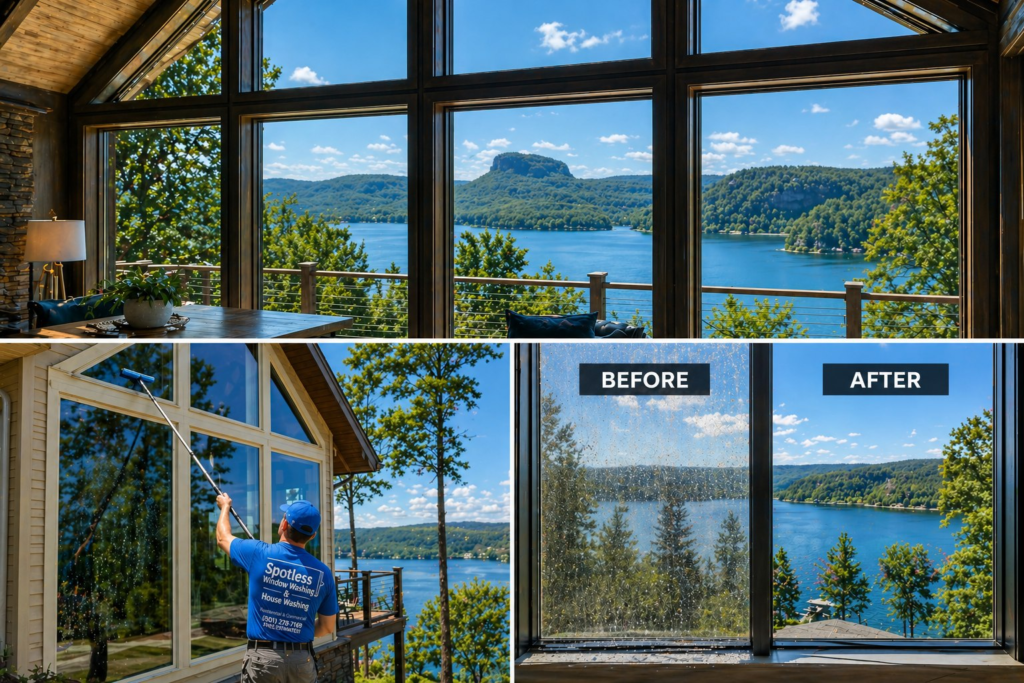
Professional lake house window cleaning reveals the view you paid for. Lake House Window Care in Greers Ferry and Heber Springs Owning a lake house in Greers Ferry or Heber Springs is one of the great perks of living in or near Central Arkansas. Waking up to water views, hosting friends and family for weekend getaways, having a place to escape to when Conway or Searcy gets too hectic—there’s a lot to love about it. But lake houses come with a unique set of maintenance challenges that inland homes don’t face. And when it comes to windows, those challenges can be significant. If you’ve got a vacation rental property near the lake—or even a private getaway you use a few times a year—you need to understand what you’re dealing with. Why Lake Houses Are Harder on Windows The same things that make lake living wonderful are also hard on your home’s exterior. Water, humidity, trees, wildlife, and weather exposure all affect your windows in ways that city or suburban homes don’t experience. Humidity and moisture are constant. Lakes create a microclimate of higher humidity. That moisture is in the air constantly, not just after rain. It settles on every surface, feeds organic growth, and works its way into any seal or gap it can find. Your windows in a lake house are fighting humidity that they never get a break from. Mineral-rich water from the lake and wells. Depending on your property’s water source, the water hitting your windows—whether from rain, sprinkler systems, or boat wake—may be high in minerals. That means hard water stains build up faster, and once they bond to glass, they’re stubborn to remove. Heavy tree cover is common. Lake properties are often heavily wooded for privacy and aesthetics. That tree cover means less airflow to dry surfaces, more shade that prevents windows from warming and drying after rain, and more organic debris—leaves, pine needles, bird droppings—landing on windows and frames. Seasonal storm exposure. Arkansas lakes see significant weather: summer thunderstorms, spring tornado season, occasional tropical remnants that push through in late summer and fall. Wind-driven rain and hail can damage windows, push debris against them, and coat exterior surfaces with whatever water they pick up along the way. Wildlife activity. Birds, squirrels, and other wildlife around a lake property interact with your windows in ways that city windows don’t. Nose prints, droppings, nesting materials, and scratches all require attention. The VRBO Factor: Why Clean Windows Matter More at the Lake If your Greers Ferry or Heber Springs property is a VRBO or Airbnb rental, window cleanliness isn’t just about aesthetics—it’s about your rating and your revenue. Guests come for the view. This is the most important thing to understand. Lake house guests are paying a premium specifically to enjoy that water view. They want to wake up and see clear glass between them and the lake. They want morning coffee looking at sunlight on the water, not through a haze of hard water stains and nose prints. Dirty windows in listing photos. If you’re photographing your VRBO listing for VRBO or Airbnb, dirty windows will show up in every wide-angle interior shot. Natural light coming through dirty windows looks horrible. And guests are scrolling through dozens of listings—yours will get passed over. Review language. Read the reviews of any popular lake house rental in the Greers Ferry area. Guests frequently mention the views, the scenery, the beauty of the lake. Now read the negative reviews. “View wasn’t as nice as expected” is code for dirty windows. Your listing is competing on that view, and if your windows are dirty, you’re delivering a worse view than the listing two doors down with clean windows. Faster buildup than inland homes. Because lake house windows face constant humidity and exposure, they get dirty faster. The cleaning schedule that works for a home in Conway won’t work for a lake house. You need more frequent service. Seasonal Maintenance Calendar for Lake Properties Here’s how we recommend thinking about window maintenance for lake houses in the Heber Springs and Greers Ferry area. Pre-Summer (April – May) This is your most important cleaning of the year. Here’s why: – Winter left a buildup of grime, potential ice damage, and debris – Peak rental season is about to start, and you want pristine windows when those first spring bookings arrive – Spring storms are coming, and clean windows are better able to withstand weather events than windows with degraded seals or accumulated debris in frames – This is when you’ll see the most benefit: clean windows during Arkansas’s beautiful spring lake weather make your property shine What to do: Full interior and exterior professional cleaning. Frames, sills, screens, and glass. All of it. Mid-Summer (July – August) By mid-summer, your windows have been through humidity, rain, storms, and likely several rental turnover cycles. A mid-summer cleaning keeps things fresh. – Remove the buildup of hard water stains, dust, and organic debris from the first half of summer – Inspect window seals and frames for any damage that summer storms may have caused – This is especially important if you offer summer vacation rentals. Summer guests are families with kids who touch everything, including windows. Clean glass matters more with kids in the house. Post-Summer (September – October) Fall is an underrated time for lake house maintenance. Here’s what to consider: – Summer storms are winding down, but fall brings its own challenges: leaf debris, falling pine needles, and the first cool fronts that cause condensation – If you’re still renting into fall (many lake properties do well in September and October), keep windows clean through the season – This is also a good time for an exterior-only cleaning to remove summer buildup before winter – Consider this your “winter prep” cleaning: get windows into good shape before the property goes into its slower season Off-Season (November – March) Most lake houses see reduced bookings and less use in winter. This doesn’t

Uncategorized

Skylight and Solar Panel Cleaning: The Overlooked Services

# Skylight and Solar Panel Cleaning: The Overlooked Services Ask any homeowner what they do for window cleaning and they’ll probably have some answer—maybe they tackle it themselves, maybe they hire someone occasionally. Ask the same homeowner if they’ve ever had their skylights cleaned and you’ll get a lot of blank stares. The same goes for solar panels. Arkansas gets plenty of sun, and more and more homeowners in Conway, Heber Springs, Searcy, and across Central Arkansas have invested in solar panel systems. But when’s the last time anyone cleaned those panels? For most homeowners, the answer is never. Skylights and solar panels are essentially windows that most people completely forget about—until something goes wrong or they notice the light coming through isn’t what it used to be. Let’s talk about why these overlooked surfaces deserve attention and what happens when they don’t get it. The Skylight Problem: Out of Sight, Out of Mind Skylights are one of the most beautiful features you can add to a home. They bring natural light into spaces that would otherwise feel dark—bathrooms, hallways, kitchen nooks, living rooms with high ceilings. In Arkansas, where we get plenty of sunshine but also plenty of rain and humidity, skylights make a real difference in how a home feels. But skylights have a dirty secret: they get filthy faster than almost any other surface in your home. Think about it. A skylight is horizontal, sitting flat on your roof. Rain doesn’t just run off it the way it does a vertical window—it pools, evaporates, and leaves mineral deposits. Dust and pollen settle on it and don’t get washed away unless there’s heavy rain. Bird droppings, tree sap, and leaf residue all accumulate on top. And because it’s overhead and out of sight, you don’t notice any of this until the light coming through starts to look dim, yellowish, or hazy. By that point, your skylight is probably gross. What dirty skylights cost you: – Reduced natural light in the rooms below. A skylight that’s lost 30% of its clarity to buildup means 30% less light entering your home. – A dingy, neglected appearance even if the rest of your home is well-maintained. – The risk of permanent damage. Some skylights have protective coatings that can be degraded by accumulated debris and the cleaning products you might use on them without knowing what you’re doing. – Voided warranties. Many skylight manufacturers specify professional cleaning as a maintenance requirement. If you try to clean it yourself and damage the glass or frame, you could void that warranty. Why DIY skylight cleaning is risky: You’re on the roof. That’s the first problem. Skylights are typically installed on roofs with at least some pitch, and even flat-roof skylights require getting up on the roof to clean the exterior glass properly. Most homeowners aren’t comfortable or equipped for that. Beyond the safety issue, skylight glass is often different from regular window glass. Some skylights have low-emissivity coatings or other treatments that require specific cleaning products. Using the wrong solution—or the wrong abrasive material—can permanently damage those coatings. A professional skylight cleaning addresses all of this safely and correctly. Solar Panels: The Invisible Performance Killer If you have solar panels on your roof in Central Arkansas, you made that investment to generate power and reduce your electricity bills. But here’s something most solar panel owners don’t realize: dirty solar panels can lose 15-30% of their energy production efficiency. That’s not a small number. If your system is supposed to generate $200 worth of electricity per month and it’s losing 25% to panel soiling, you’re throwing $600 a year in value away. Over a decade, that’s $6,000 of electricity you paid for equipment to generate but never received. What builds up on solar panels: – Dust and particulate matter from the air (especially after construction activity in your neighborhood) – Pollen, which can be significant in Arkansas springs – Bird droppings and animal activity – Tree sap and leaf residue – Industrial or agricultural particulate depending on where you live – Hard water deposits if your panels are in an area affected by sprinklers or mist Why rainfall doesn’t clean them: Many homeowners assume rain will take care of the panel cleaning. But rain doesn’t fall straight down—it runs off at angles that concentrate the water along certain paths, leaving most of the panel surface untouched. And when that rainwater evaporates, it leaves behind the exact same mineral deposits that cause hard water stains on windows. The panels end up dirtier than before the rain. The DIY vs. professional question for solar panels: This is one area where DIY cleaning is genuinely risky. You can walk on many solar panel systems, but doing so incorrectly can void your warranty or damage the panels themselves. You also need to work on a roof, which brings the ladder and fall risk we talked about with skylights. More importantly, professional solar panel cleaning services know how to work around the electrical systems, the mounting hardware, and the panel surfaces without causing damage. They use pure water systems that don’t leave residue, and they inspect the panels while they’re cleaning to make sure everything is secure and functioning. Some solar panel warranties also require professional cleaning to remain valid. Check your documentation—if you’re supposed to have annual professional cleanings and you don’t, you could void your warranty. The Connection: Overlooked Surfaces, Real Consequences Skylights and solar panels share a common problem: they’re up and out of sight, so they’re out of mind. But they’re also expensive features of your home that perform specific functions—bringing light in, converting sunlight to power—and their performance degrades when they’re dirty. Here’s what most homeowners don’t realize: skylights and solar panels are often installed in the same kind of roof access situation. If you’re already having your windows and skylights professionally cleaned, having your solar panels cleaned at the same time makes sense logistically and economically. It’s one service appointment, one technician

diy vs pro comparison
Uncategorized

DIY Window Cleaning vs. Hiring a Pro: When to Call the Experts

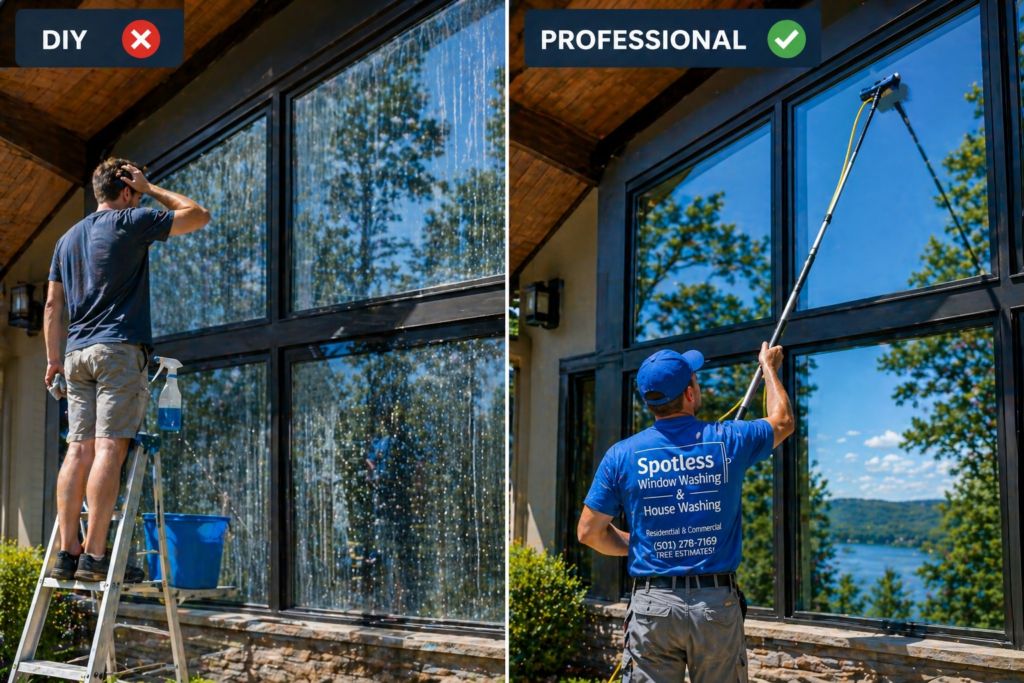
DIY Window Cleaning vs. Hiring a Pro: When to Call the Experts There’s a kind of homeowner who sees a task, decides they can handle it themselves, and saves some money in the process. Nothing wrong with that mindset—it served you well when you painted the guest bedroom and organized the garage. Window cleaning seems like another one of those jobs. Spray some glass cleaner, wipe it off, done, right? Except… maybe not. Maybe you’ve already tried cleaning your windows yourself and ended up with streaks that looked worse than before you started. Or maybe you’ve been putting it off for months—or years—because every time you look at the job, it feels bigger than you want to deal with. And the results you’ve been getting aren’t really satisfying you. Here’s the honest conversation about DIY window cleaning versus hiring a professional. We’re going to talk about what you’re actually dealing with, what’s worth doing yourself, and when it makes more sense to call in someone who does this every day. A professional window cleaning reveals the view you paid for. Professional equipment and technique delivers consistent, streak-free results. The Case for DIY Window Cleaning Look, there are absolutely times when you can clean your own windows and get decent results. If your windows are: – Mostly just dusty from a long winter – Not suffering from hard water stains or heavy mineral deposits – Accessible from inside without climbing onto the roof or a high ladder – On a single-story home with standard-sized windows …then yes, with the right approach, you can maintain them yourself between deeper professional cleanings. What “the right approach” actually means: – Use a squeegee, not paper towels or spray-and-wipe. A good rubber-blade squeegee, used properly, leaves glass nearly streak-free. The technique matters—you want overlapping strokes, wiping the blade after each pass. It takes practice but it’s the right tool. – Use the right cleaning solution. A gallon of warm water with a few drops of dish soap works fine for light dust and fingerprints. For slightly more buildup, a 50/50 mix of distilled vinegar and water does a decent job on routine grime. Avoid the “blue stuff” window cleaners with heavy fragrances and additives—they leave residue. – Clean the frames and sills too. Most people only clean the glass and ignore the frames, where dust, dead bugs, and debris accumulate. Wipe down all surfaces. – Do both sides. Interior glass gets most of the attention, but exterior windows—especially upper floors—accumulate far more grime. If you can’t safely reach exterior windows from the ground or a stable ladder, accept that those will need professional attention eventually. The Limits of DIY Window Cleaning Here’s where the enthusiasm of the DIY approach meets reality. Most homeowners who tackle window cleaning run into the same problems: Streaks everywhere. Despite their best efforts, they end up with a window that looks clean in some light but shows streaks in others. The sun coming through at a certain angle reveals the truth. This usually happens because the squeegee technique wasn’t right, or the cleaning solution left a residue, or the cloth used to wipe the blade was dirty. Hard water stains that won’t budge. Once minerals have bonded to the glass surface, a spray bottle of vinegar isn’t going to do much. The homeowner scrubs, uses more cleaner, scrubs harder—and ends up with scratched glass and stains that are still there. Only the interior gets done. Exterior windows—particularly second-story windows—are neglected because the job requires ladders, climbing, and risk. The result is windows that look clear from inside but are filthy from outside, which is the opposite of how it’s supposed to work. Time, frustration, and physical effort. Cleaning every window in a typical Conway or Heber Springs home can take an entire afternoon. A whole day if it’s a larger house. That’s time you could spend with family, working, or doing something you actually enjoy. And by the end, your shoulders ache from reaching and your neck hurts from looking up. Results that don’t last. Even when DIY cleaning is done well, the results don’t last as long as professional cleaning because the equipment and products used aren’t as effective at removing all the residue and contaminants. When It’s Definitely Time to Call the Professionals There are specific situations where DIY just isn’t worth attempting. If you recognize any of these scenarios in your home, pick up the phone and call a pro. Hard water stains or severe mineral deposits. If you can see white, cloudy patches or streaks on your windows that have been there for more than a few weeks, you need professional treatment. The longer those stains sit, the more they bond to the glass. Trying to remove them yourself risks making them worse. Multi-story homes with high windows. Falls from ladders send thousands of people to the emergency room every year. If your second-floor windows—or even first-floor windows you can’t safely reach—need cleaning, that’s a professional’s job. They’ve got the right equipment, the training, and the insurance for working at heights. Specialty windows: skylights, solar tubes, oversized panes. These require specialized equipment and knowledge. Skylights, in particular, are notorious for accumulating grime that most homeowners never notice until they’re looking up—and then realize they’ve got a dirty skylight problem they’d rather not deal with on a ladder. Commercial properties or rental homes. If you’re a business owner in Conway or a VRBO host in Greers Ferry, clean windows are part of your professional image and your guest experience. The investment in professional cleaning pays for itself in ratings, repeat customers, and avoiding the awkwardness of a customer seeing your dirty storefront or rental windows. After construction or major renovation. Post-construction window cleaning is a completely different job from routine maintenance. Paint overspray, cement dust, and construction debris require professional-grade products and techniques. Don’t try to tackle this yourself—you’ll make it worse. Windows that haven’t been professionally cleaned in years. If you’ve moved into a home

Uncategorized

Why VRBO Hosts Can’t Afford Dirty Windows

# Why VRBO Hosts Can’t Afford Dirty Windows If you’re renting out your property on VRBO, Airbnb, or any of the short-term rental platforms, you already know how much competition there is. Every listing in Conway, Heber Springs, Greers Ferry, or wherever your property sits in Central Arkansas is fighting for the same guest’s attention. And guests—many of whom are traveling specifically to enjoy everything Arkansas has to offer, from Lake Greers Ferry to the scenic routes around Searcy—are making split-second decisions based on photos. Here’s the uncomfortable truth that a lot of local hosts miss: dirty windows are costing you bookings, lowering your ratings, and putting money in your competitors’ pockets. Window cleanliness is one of the first things a prospective guest notices when they’re scrolling through photos. And it’s one of the things they scrutinize most closely once they arrive. A guest who’s traveled three hours to enjoy a weekend at the lake does not want to look out cloudy, spotted windows and see a hazy view of the water they came to see. That moment—that first look out the window—shapes their entire impression of your property. The Photo Problem: How Dirty Windows Show Up in Listings Most short-term rental properties are photographed professionally. Wide angles, good lighting, staging that makes every room look inviting. And in those photos, dirty windows are brutally obvious. Natural light streaming through windows is one of the most common photo techniques for making interior spaces look bright and welcoming. But that same light? It makes hard water stains, dust, nose prints, and smudges glow like spotlights. A beautiful living room shot becomes a commercial for how dirty your windows are when that beam of sunlight catches every single spot and streak. Guests aren’t stupid. They scroll past those photos, they notice the haze, and they move on to the next listing. And the guests who do book anyway? They arrive already expecting dirty windows—which means your listing has set a low bar before they even walk through the door. What Guests Actually Notice (And Review) After a stay, guests leave reviews. And while they might not explicitly write “the windows were dirty” in every review, that feeling shows up in other ways. Look at the language in less-than-five-star reviews from VRBO hosts: – “The view wasn’t what we expected” (translation: the windows were dirty and ruined the lake view) – “The house felt dated” (dirty windows make everything look older and more worn than it is) – “It was fine, but nothing special” (a fresh, clean window view elevates every space) – “We wished we’d picked somewhere else” (it only takes one negative first impression) You might be getting reviews that mention cleanliness in general terms, but the actual culprit is the windows. They just don’t realize it yet. On the flip side, properties with crystal-clear windows consistently get mentioned in reviews. Guests notice when they can see clearly. When the morning light coming through the bedroom window shows every detail of the lake outside. When they can sit at the dining table and feel connected to the outdoors because there’s nothing between them and the view. Seasonal Challenges for Lake Area Rentals If your VRBO property is near Greers Ferry Lake or Heber Springs, you have a unique set of window challenges that inland properties don’t face. Lake humidity and mineral deposits. The lake environment means higher humidity, more frequent temperature changes, and—depending on your water source—water that leaves mineral deposits on every glass surface. That beautiful lake view you’ve been featuring in your listing photos? After a few months of sprinkler overspray or lake-effect humidity, those windows tell a different story. Seasonal traffic patterns. Lake rentals spike in spring, summer, and early fall. That’s when you’re most likely to have back-to-back bookings and the least amount of time between guests to do deep cleaning. If your windows get neglected for even one guest cycle, the buildup becomes visible fast. Weather events. A single major storm—particularly one with wind-driven rain—can coat every exterior window in a layer of grime and mineral-rich water. After a rough spring storm in Central Arkansas, your windows might look fine from inside, but step outside and you’ll see what your guests are seeing. This is why regular, scheduled window maintenance isn’t optional for serious VRBO hosts. It’s part of protecting your investment and keeping those five-star ratings coming. The Math: What Dirty Windows Actually Cost You Let’s do some quick math that most VRBO hosts never bother with. Say your property books for $200 a night with a 60% occupancy rate during peak season. That’s roughly $43,800 in gross annual revenue. Now let’s say dirty windows are causing you to lose just 10% more bookings than you would with pristine windows—maybe because guests choose a competitor, or because you get fewer repeat bookings, or because your listing ranking drops in search results because of lower review scores. That’s $4,380 a year in lost revenue. Easily. Now compare that to professional window cleaning. For a typical lake house in the Greers Ferry or Heber Springs area—let’s say a three-bedroom with 15-20 windows—you’re looking at $150-$300 per professional cleaning session. Schedule it four times a year (spring, early summer, late summer, fall) and you’re spending $600-$1,200 annually to protect $4,380 or more in revenue. That’s a return on investment that should make any business-minded host take notice. And if you’re currently handling window cleaning yourself between guests? You’re spending time you could be running your business, probably doing an inferior job, and still not getting the results that professional cleaning delivers. What Professional Window Cleaning Gives Your VRBO Property When you hire a professional window cleaning service that understands short-term rentals, you’re getting more than just clean glass. Consistent, reliable results. Your property looks great in photos every time, which means your listing stays competitive. Guests see what they expected to see, arrive with positive expectations, and leave positive reviews. Attention to hard-to-reach windows. Vacation rentals—especially lake

Uncategorized

Hard Water Stains on Windows: What Works and What Doesn’t

# Hard Water Stains on Windows: What Works and What Doesn’t Hard water stains are one of the most frustrating things a homeowner deals with when it comes to their windows. If you live in Central Arkansas—especially near lakes like Greers Ferry or in areas with well water—you’ve probably seen them: cloudy, white, or hazy spots that won’t wipe away no matter how much paper towel you use. They show up after rain, after your sprinkler hits the windows, or just over time as water evaporates and leaves minerals behind. The truth is, hard water stains aren’t just a cosmetic issue. They can actually etch into glass over time, causing permanent damage if left untreated. And the DIY methods you’ll find on Google? Most of them either don’t work well or end up doing more harm than good. Let’s talk about what’s worth trying and when it’s time to bring in the professionals. What Even Are Hard Water Stains? Hard water stains are deposits left behind when water with high mineral content—mainly calcium and magnesium—evaporates from a surface. The minerals don’t just disappear. They stay right where the water was, building up in thin layers that become increasingly difficult to remove. On your windows, this means: – Cloudy, foggy patches that show up in sunlight – White or off-white streaks, especially near the edges and bottom frames – A rough texture you can feel with your fingernail in bad cases – Stains that get darker or more stubborn the longer they’re ignored In Conway, Heber Springs, Searcy, and the surrounding areas, many homes rely on well water or live near agricultural zones where mineral content in groundwater tends to run high. That means hard water stains aren’t just an occasional nuisance—they’re a recurring challenge that requires ongoing maintenance or a smarter approach. What Doesn’t Work: Common DIY Mistakes Before we talk about what actually works, let’s clear the air on the methods that will waste your time—or worse, damage your windows. Vinegar and water sprays. Yes, white vinegar is mildly acidic and can dissolve fresh, light mineral deposits. But if the stain has been sitting for weeks or months? The concentration in a kitchen spray bottle won’t cut it. You’ll scrub for twenty minutes and see maybe a 10% improvement. Plus, vinegar can leave its own residue if not rinsed completely, and it smells terrible working with it on every window in your house. Baking soda paste. Baking soda is a mild abrasive, which sounds like it would help scrub away buildup. And it might, on a tiny test spot. But rub too hard and you’re creating micro-scratches in your glass that catch light and make everything look hazier than before. Those micro-scratches are permanent. You’ve traded a hard water stain for permanent cloudiness. Razor blades and scrapers. We see homeowners try this one a lot. And look, a single-edged razor can remove some types of window deposits if used correctly by someone trained. But if you don’t know the correct angle, the right pressure, and the proper technique, you’ll scratch the glass every single time. Those scratches catch grime, show up in certain light, and can’t be polished out without professional equipment. Paper towels and newspaper. These leave micro-fibers and ink residue behind. Your “clean” window ends up with streaky lines you didn’t have before. Store-bought glass cleaners with hard water stain remover additives. Some of these work okay for light deposits. But many use mild acids or solvents that can degrade window seals and frames over time, especially if used repeatedly. Read the label on that bottle in your garage and look for warnings about not using it on tinted or coated glass—because if your windows have any kind of film or treatment, those products can cause real damage. What Actually Works (And What You Might Try at Home) If you’ve got brand new, light hard water stains—say, from a recent rainstorm or sprinkler overspray—you might get decent results with a few approaches: – Distilled white vinegar, undiluted, applied with a soft cloth and allowed to dwell for 2-3 minutes before wiping. Use a microfiber cloth, not paper towel. Rinse thoroughly with clean water. – Soft nylon mesh scrub pads (the kind made for cleaning glass stovetops) used gently on isolated spots. Again, test on a small hidden area first. – A single-edged razor blade held at a very low angle—almost flat against the glass—for spot treating isolated mineral deposits. This only works if the blade is brand new and you’re extremely careful. For anything beyond light, fresh deposits, these methods start to fail. The minerals bond to glass in ways that soap and vinegar can’t fully reverse. And the more you scrub at it, the more likely you are to make things worse. Why Professional Hard Water Stain Removal Is Different This is where it pays to call someone who does this every day. Professional window cleaners don’t just have better tools—they have training, experience, and a completely different approach to the problem. Professional-grade solutions used by experienced cleaners aren’t the same products you’d find at the hardware store. They include carefully formulated acid-based cleaners calibrated to dissolve mineral deposits without attacking glass or damaging seals. The key is knowing which product to use on which type of stain, how long to let it work, and how to neutralize and rinse it completely. Professional tools matter too. A professional uses specialized scrub pads, precision razor tools, and sometimes even motorized polishing equipment for severe cases. That motorized polishing—with the right compounds—can actually remove light etching caused by long-neglected hard water stains. You can’t rent that equipment and figure it out in an afternoon. It’s a skill built over years of practice. Proper technique prevents damage. One of the most common things we see when we arrive at a home where the owner tried to fix hard water stains themselves is scratched glass. The scratches came from good intentions: too much pressure, wrong angle, abrasive product. Professional

Uncategorized

Window Screens: Cleaning, Repair, and When to Replace Them in Arkansas

Window screens do two important jobs: they keep insects out and they protect your window glass from impacts. Over time, screens in Arkansas homes take a beating — pollen and dust plug up the mesh, UV rays make the material brittle, pets and ветвдддд children damage the mesh, and storms push debris into them at speed. Here is what every Arkansas homeowner needs to know about keeping their window screens in good condition. How Often Should You Clean Window Screens? At minimum once a year — and ideally twice. In Conway and throughout Central Arkansas, spring is the most important time to clean your window screens because of pollen. A screen that has collected a full season of oak and cedar pollen is not just dirty — it is partially blocked, which means less airflow through your windows when you want them open. Cleaning screens restores full airflow and lets you see through them more clearly as a bonus. The right way to clean screens: remove them from the window, lay them flat on a hard surface like a driveway, and scrub both sides with a soft brush — a kitchen scrubbing brush or a soft-bristle car wash brush works well — using mild soap and water. Rinse thoroughly with a garden hose and let them dry completely before reinstalling. Do not pressure wash screens — the pressure can stretch or tear the mesh. Common Screen Damage and What to Do About It Small holes or tears: If the damage is minor — a small tear or a hole from a cigarette ember or similar — you can repair it with a screen repair kit from any hardware store. These kits contain a small piece of replacement mesh and adhesive. They work best on tears no larger than a couple of inches. Larger tears generally require replacing the whole screen panel. Pet damage: Dogs and cats that scratch at screens — especially at doors — create tears along the bottom edge that are often too large for a simple repair kit. If your pet regularly damages window screens, consider upgrading to a heavier-duty pet screen material, which is woven from a thicker, more resistant material. UV damage and brittleness: If the mesh cracks or crumbles when you touch it, the screen material has simply aged out. UV exposure over years makes the material brittle regardless of how well you maintain it. At that point, replacement is the only option. Screen replacement for a standard residential window runs $15-30 per screen if you do it yourself, or $40-60 per screen if you have a hardware store or window company do it. Dented or bent frames: Aluminum screen frames can be dented by impacts — a ladder placed too close, a ball thrown too hard, a storm-flung branch. Small dents do not affect function. Larger dents that distort the frame shape can prevent the screen from sitting flat in the channel, which means gaps where insects can get in. A bent frame usually requires replacing the whole frame assembly. When to Call a Professional for Screen Work If you have more than five or six screens needing attention, or if any of them are on second-story windows that require ladder access, it makes sense to have a professional handle the full set. We offer screen cleaning and minor repair as part of our residential window cleaning service. For screen replacement on hard-to-reach windows, we can handle it as a separate service. What we check on every screen during our residential service: mesh condition — tears, holes, UV damage; frame condition — bends, gaps, missing spline; spline condition — the rubber cord that holds the mesh in the frame, which can crack and shrink over time; and attachment hardware — the clips or latches that hold screens in the window frame. Preventing Screen Damage A few habits go a long way toward keeping your screens in good shape. Keep pets’ nails trimmed, or use window film or a pet barrier on doors with screen access. When running a lawn mower or weed eater near window screens, rinse them afterward — the impact of debris thrown at the mesh at speed can stretch or tear the material. If you store screens for the winter, keep them in a dry place; stacking wet screens promotes mold and accelerates frame corrosion. Contact Spotless Window Washing at 501-278-7169 to add screen cleaning to your next window service. Licensed and insured. Serving Conway, Greenbrier, Beebe, Heber Springs, Searcy, Greers Ferry, Little Rock, and all of Central Arkansas since 2003. M. Victor KilgoreM. Victor Kilgore has been cleaning windows across Central Arkansas since 2003. As the owner of Spotless Window Washing in Searcy, he provides residential and commercial window cleaning services throughout Heber Springs, Greers Ferry, Little Rock, and surrounding communities. A family-owned and operated business, he and his wife share insights on window maintenance, lake home care, and keeping properties looking their best year-round. spotlesswindow-washing.com

Uncategorized

The Best Time of Year to Clean Windows in Central Arkansas

Property owners across Conway, Searcy, Heber Springs, and the rest of Central Arkansas often ask us when the ideal time is to schedule professional window cleaning. The honest answer is: it depends on what you are trying to accomplish and what kind of property you have. Here is a season-by-season breakdown of the advantages and disadvantages of each timing option. Spring Cleaning: March Through May Spring is the most popular time for residential window cleaning, and for good reason. After a full winter of cold weather, your windows have accumulated grime, pollen is starting to coat exterior surfaces, and the longer days mean you notice the dirt more. Spring cleaning gets your home ready for the warm months ahead. The challenge with spring cleaning in Arkansas is timing. Pollen season in Conway and throughout the region starts in late February and peaks in April and May. If you schedule a window cleaning in early March, you may get two or three months of clean windows before the heavy pollen hits. If you schedule in late April, your newly cleaned windows will be coated almost immediately. Work backward from your schedule — if you want clean windows for a spring event or gathering, plan to have them cleaned two to three weeks before. For lake properties around Greers Ferry and Heber Springs, spring cleaning is especially important. Lake properties accumulate more debris than typical residential homes due to the surrounding environment, and most lake homeowners want their properties looking their best before the summer rental season begins. Summer: June Through August Summer window cleaning has one main advantage: you can tackle it on your schedule rather than being constrained by weather. Summer storms can quickly dirty freshly cleaned windows, but they also clean pollen off your property in a sense, resetting the clock. The disadvantage of summer is heat. Window cleaning solution works best when applied to warm glass — it cuts through oils and residue more effectively. In the Arkansas summer, glass can get too hot, causing cleaning solution to dry too quickly and leave streaks. Professional window cleaners time their work for early morning or late afternoon in summer to avoid this. Fall: September Through November Fall is our personal recommendation for timing, particularly October. By then, the brutal Arkansas summer heat has broken, pollen season is winding down, and before the winter weather sets in, your windows are clean and protected heading into the months when you are indoors the most. Fall window cleaning in Conway, Greenbrier, Beebe, and throughout Faulkner County also means you can inspect your window seals and caulking before winter — catching a cracked seal or failing caulk in October means you can address it before the freeze-thaw cycles of winter do their damage. A fall cleaning also means your windows are in good shape for the holiday season — whether you are hosting family or just want your home looking its best for the darker months when indoor light matters more. Winter: December Through February Winter window cleaning is less common but entirely viable for exterior work in Central Arkansas, where we rarely have sustained freezing temperatures. There is even a case for it: in winter, trees are bare and there is less pollen and environmental contamination in the air. Interior window cleaning during winter is actually ideal — your heating system is running, humidity inside is lower, and cleaning solution dries quickly without streaking. The main constraint on winter exterior cleaning is ice on windows from freezing rain or frost — we simply cannot clean glass safely in those conditions. But for interior-only cleaning during winter, any time works. How Many Times Per Year? For standard residential properties in Conway or Searcy: twice a year is adequate — once in spring and once in fall. For properties with more exposure — lake homes, wooded lots, homes near fields or unpaved roads — four times a year is better. For commercial properties, monthly to quarterly depending on location and foot traffic. Contact Spotless Window Washing at 501-278-7169 to set up a regular cleaning schedule that works for your property and your budget. Licensed and insured. Serving Conway, Heber Springs, Searcy, Greers Ferry, Little Rock, and all of Central Arkansas since 2003. M. Victor KilgoreM. Victor Kilgore has been cleaning windows across Central Arkansas since 2003. As the owner of Spotless Window Washing in Searcy, he provides residential and commercial window cleaning services throughout Heber Springs, Greers Ferry, Little Rock, and surrounding communities. A family-owned and operated business, he and his wife share insights on window maintenance, lake home care, and keeping properties looking their best year-round. spotlesswindow-washing.com

Uncategorized

Winter Window Care: Protecting Your Conway Home from Moisture Damage

Winter in Conway and Faulkner County brings cold nights, occasional ice storms, and the kind of moisture that can do real damage to your windows and the surrounding structure of your home if you are not paying attention. A little preventative care before winter sets in can save you thousands in repairs come spring. The Freeze-Thaw Cycle: Your Window’s Worst Enemy Arkansas winters are not consistently cold, but they are variable — freezing temperatures at night followed by milder daytime temperatures create what engineers call the freeze-thaw cycle. Water from rain and melting frost soaks into tiny cracks in window frames, seals, and the surrounding siding. When that water freezes overnight, it expands by about 9%. This tiny expansion widens cracks and loosens seals incrementally. After a few cycles, what was a hairline crack in the fall is a significant gap by March. The solution is to inspect and seal window exteriors before winter, not after. Late October or early November — before the first hard freeze — is the right time to walk your property and check the condition of every window. What to Look For During a Winter Window Inspection Caulking gaps: Walk around the exterior and look at the caulk line where each window frame meets the siding. Any gap, cracking, or peeling caulk should be re-caulked before winter. Use a high-quality exterior caulk rated for windows and doors — the difference between brands is meaningful in terms of flexibility and adhesion. Seal integrity on double-pane windows: If you notice condensation or fogging between the two panes of glass in any of your windows, that seal has failed. This is not just an appearance problem — it means moisture is getting between the panes and the insulation value of that window is compromised. Failed seals need to be addressed before they worsen. Window operation: Make sure all windows close and lock properly. In older homes in Conway’s historic neighborhoods, windows that have not been opened all summer may have swelled slightly from humidity. Trying them now, before the cold sets in, gives you time to sand or plane the frame if needed — rather than discovering a stuck window when you actually need to close it against a north wind. Drip cap condition: The metal or vinyl flashing above your windows — the drip cap — directs water away from the frame. If it is bent, loose, or missing, water can get behind the frame and into the wall. This is especially important on upper-story windows where you cannot easily see the drip cap condition. Indoor Winter Window Care Inside your home, winter creates a different challenge: condensation. When warm, humid air inside your home meets cold window glass, the air temperature drops and moisture condenses on the glass — or worse, runs down the glass and pools on the windowsill. Over time, this moisture can damage wooden sills and promote mold growth in corners and edges. The fix is to manage indoor humidity. Run your exhaust fans when cooking and bathing. If you have a whole-home humidifier on your HVAC system, make sure it is set appropriately for winter — too much humidity inside is just as problematic as too little. If you consistently have condensation on interior windows in the winter, talk to an HVAC professional about your humidity levels. What Professional Window Winterization Includes When we prepare windows for winter at a Conway-area home, we inspect and clean the tracks and channels so windows close properly, check and re-apply caulking where needed, inspect drip caps and flashing, and note any windows with failed seals that should be addressed before winter weather arrives. Contact Spotless Window Washing at 501-278-7169 for a pre-winter window inspection and any needed repairs. We serve homeowners throughout Faulkner County and the broader Conway area. Licensed and insured. Serving Conway, Greenbrier, Beebe, Heber Springs, Searcy, Greers Ferry, Little Rock, and all of Central Arkansas since 2003. M. Victor KilgoreM. Victor Kilgore has been cleaning windows across Central Arkansas since 2003. As the owner of Spotless Window Washing in Searcy, he provides residential and commercial window cleaning services throughout Heber Springs, Greers Ferry, Little Rock, and surrounding communities. A family-owned and operated business, he and his wife share insights on window maintenance, lake home care, and keeping properties looking their best year-round. spotlesswindow-washing.com

Uncategorized

Pressure Washing and Window Cleaning: Why You Need Both in Searcy

In Searcy and White County, Arkansas, the exterior of your home faces a combination of humidity, pollen, clay soil, and seasonal storms that builds up on every surface over time. Drive through any neighborhood — from the historic homes near the downtown square to newer developments off Highway 36 — and you will notice which homes have been maintained and which have been left to weather. The difference is visible from the street. Why Siding and Windows Degrade Together Your home’s exterior siding and windows age in parallel. Vinyl and fiber cement siding collect mold, algae, and dirt — especially on the north side of homes and under eaves where rain does not naturally rinse them. That same grime builds up on your window glass, frames, and sills at the same rate. If you pressure wash your siding but leave the windows dirty, the contrast is actually more noticeable than if you had done neither. Clean windows against grimy siding looks almost as bad as grimy windows against clean siding. The reverse is also true. You can have the cleanest windows on the block, but if the siding is streaked with algae and mud, the whole property looks neglected. This is why professional exterior maintenance combines both services. The Order of Operations: Pressure Wash First, Then Windows If you are doing both services — and we recommend them together — the correct order is pressure washing first, then window cleaning. Pressure washing splashes a lot of water and residue upward, and that residue lands on windows. If you clean the windows first and then pressure wash, you are just dirtying your clean windows. Schedule the pressure wash for day one and the window cleaning for day two or three, once the exterior has dried. What We Look For During a Combined Service When we do a full exterior cleaning at a Searcy-area home, we pay attention to several things beyond the obvious cleaning: Window caulking and seals: The caulk around window frames takes a beating from weather and temperature changes. During our window cleaning, we note any cracking, gaps, or deterioration in the caulking and bring it to your attention. Re-caulking a window costs $5-10 in materials and takes twenty minutes — waiting until water gets behind the frame costs thousands in structural repair. Screen condition: Pressure washing can damage old or brittle window screens. We remove and hand-clean screens separately to avoid this. Gutter connections: While cleaning windows, we can see if your gutters are overflowing or leaking — signs of a clog or joint failure that may not be visible from the ground. How Often to Combine Services in Central Arkansas For most homes in Searcy, Conway, and Heber Springs, once a year is sufficient for exterior cleaning. If you have a wooded lot, live near a field or farmland, or have a lake property, twice a year is better. Pine pollen is especially aggressive in our region, and it coats everything in a fine yellow film every spring. Get a Combined Estimate Spotless Window Washing offers both pressure washing and window cleaning as standalone services and as a combined exterior maintenance package. We serve homeowners throughout White County, Faulkner County, and Cleburne County. Call 501-278-7169 for a free estimate on both services. We are based in Searcy and have been serving Central Arkansas since 2003. Licensed and insured. Serving Searcy, Conway, Heber Springs, Greers Ferry, Little Rock, and all of Central Arkansas since 2003. M. Victor KilgoreM. Victor Kilgore has been cleaning windows across Central Arkansas since 2003. As the owner of Spotless Window Washing in Searcy, he provides residential and commercial window cleaning services throughout Heber Springs, Greers Ferry, Little Rock, and surrounding communities. A family-owned and operated business, he and his wife share insights on window maintenance, lake home care, and keeping properties looking their best year-round. spotlesswindow-washing.com

Scroll to Top